Paperflite vs Content Camel 2026: Sales Content Management Compared Two focused tools, different strengths Paperflite and Content Camel are both built for the same problem: getting sales content organized, shareable, and trackable without the enterprise overhead of platforms like Seismic or Showpad. Neither is trying to be an LMS or a coaching platform. Both are content-first. That’s refreshing in a market where enterprise vendors are consolidating under PE and bundling everything at enterprise prices. Here’s where they differ: Where Content Camel is stronger Search.
PathFactory Alternative 2026: Content Experience vs Content Management Different tools for different jobs PathFactory and Content Camel look similar on the surface; both manage content, both have analytics, both create content experiences. But they solve different problems for different teams. PathFactory is a marketing tool. It creates curated content journeys (“tracks”) that guide prospects through an ABM or demand gen funnel. It tracks content consumption patterns and provides buyer intent signals. It’s built for marketing operations teams running sophisticated content-driven campaigns.
Seismic Alternative 2026: Comparison for Growing Teams The consolidation story 2025-2026 has been the year of enterprise enablement consolidation. Three deals reshaped the market: Showpad + Bigtincan merged under Vector Capital (late 2025) Highspot + Seismic merging under Permira (announced Feb 2026) Brainshark already absorbed into Bigtincan (now Showpad) The result? The top three enterprise enablement vendors are now two PE-backed entities. And if you’re a customer of any of them, the math changes: less competition means higher prices, slower innovation, and less leverage at renewal time.
Uberflip Alternative 2026: Sales Content Management Compared Uberflip vs Content Camel: Different problems Uberflip and Content Camel both deal with content. But from different angles. Uberflip is marketing-facing. It builds content destinations; hubs, streams, and personalized landing pages that aggregate your blog posts, ebooks, videos, and other assets into curated experiences. It’s designed for marketing teams running ABM campaigns, with deep integrations into marketing automation platforms like Marketo, HubSpot, and Eloqua. Content Camel is sales-facing. It’s where your team goes to find the right deck, case study, one-pager, or battlecard.
Your Reps Are Guessing What to Send. Playbooks Fixes That. Here’s a question: how does your sales team decide what content to send a prospect? I’ve asked this to hundreds of marketing leaders. The honest answer is almost always the same: they guess. Reps default to the same 3-4 “safe” assets they already know. The main deck. That one case study. Maybe a product one-pager. Regardless of the deal stage, the industry, or the buyer persona. And I get it. Your team has hundreds of assets.
Your Sales Team Is Using the Same 5 Assets. Advanced AI Search Fixes That. I bet you already know which assets your sales team reaches for. It’s the same 3-5 “safe” picks – the main deck, that one case study, maybe a product one-pager. Regardless of the deal, the stage, or the buyer. And it’s not because those are the best assets. It’s because your reps can’t find anything else. If you’re already a Content Camel customer, you know our keyword search is fast. Instant results, powered by search with AI.
Highspot Alternative for SMB Teams: Sales Content Management Without the Enterprise Price Tag You searched for “Highspot alternative” – so I’m guessing one of these is true: You evaluated Highspot, saw the pricing, and realized it’s built for a different size company than yours You’re on Highspot and the merger with Seismic has you rethinking your options You’re building your sales enablement stack for the first time and want to understand the landscape All three are valid. And all three lead to the same core question: What do you actually need from a sales content management tool, and how much should you pay for it?
Seismic Alternative for Growing Teams: Sales Content Management Without the Wait Here’s a scenario I hear about all the time: Your marketing team spent three months evaluating sales enablement platforms. You picked Seismic because it checked every box on the RFP. Then implementation started. And kept going. Four months in, you’re still configuring content workflows. Your reps haven’t touched it. Your CMO is asking why the tool that was supposed to help sales find content is itself impossible to find value in.
The Highspot-Seismic Merger: What It Means for Your Sales Content On February 12, 2026, Highspot and Seismic – the two biggest names in enterprise sales enablement – announced they’re merging. The combined company will operate under the Seismic brand, controlled by private equity firm Permira. If you’re a customer of either platform, or you were evaluating one of them, you probably have questions. I have opinions. And if you’re running a small or mid-size team that was already feeling the squeeze from enterprise enablement pricing, this merger changes the calculus significantly.
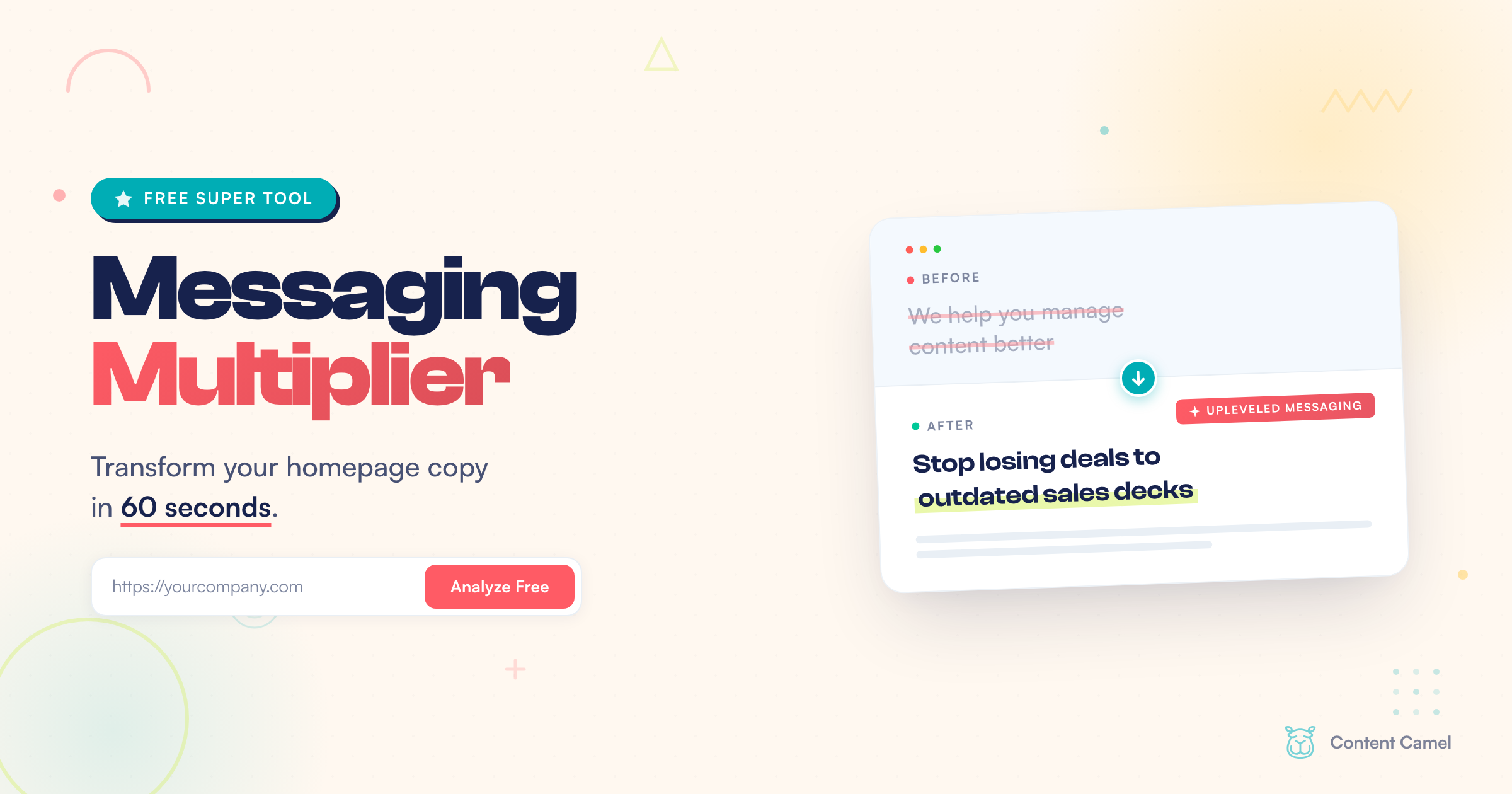
Your Homepage Headlines Are Costing You Leads Here’s the problem with most homepage messaging You spent weeks getting your homepage redesign shipped. The design is clean, the layout is sharp, the team signed off on the copy. But here’s what nobody tells you: the headlines you wrote are probably focused on you, not your buyer. And that’s exactly why visitors are bouncing. Most homepage headlines fall into the same trap. They describe what the product does. They list features.