On this page
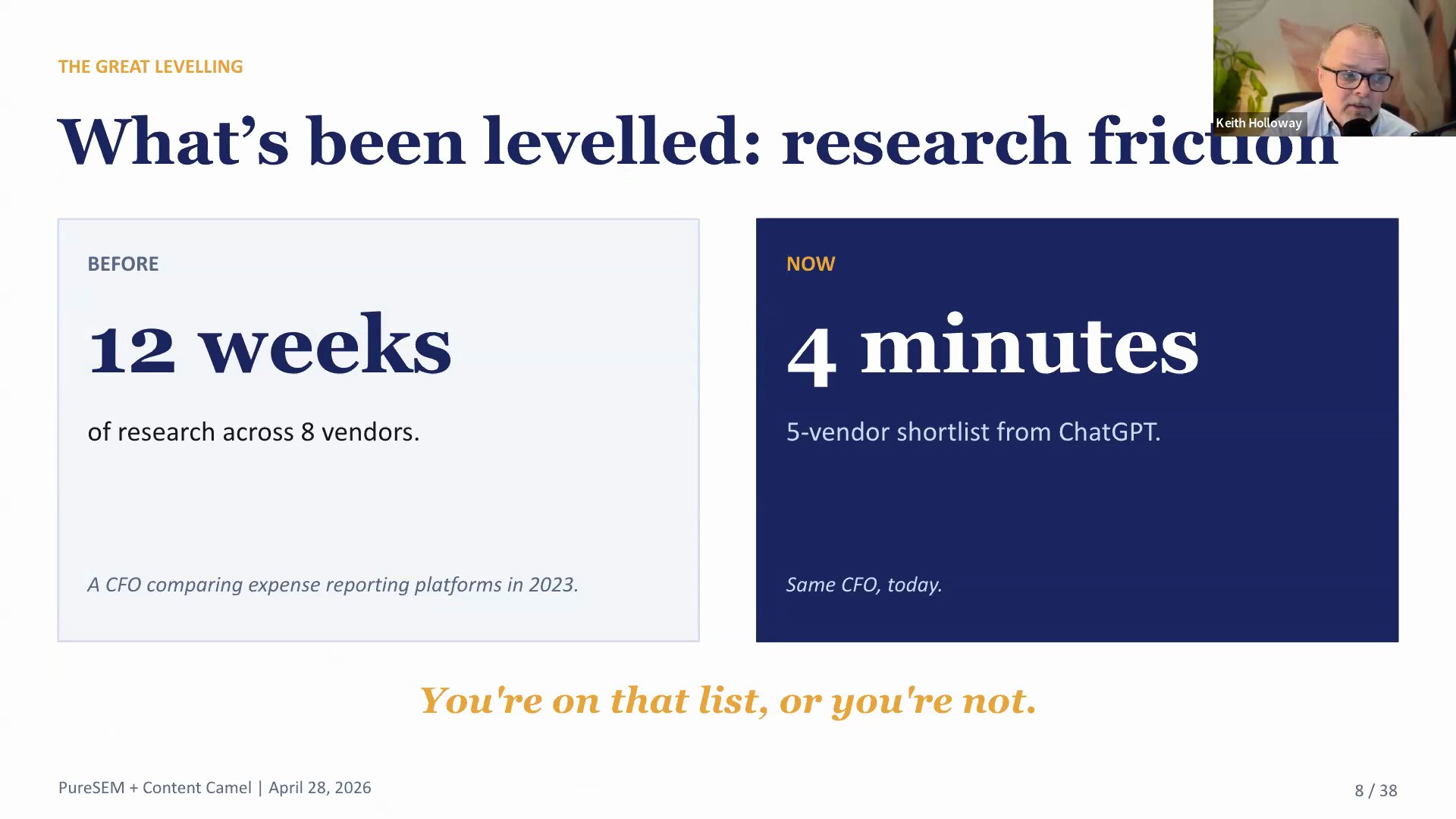
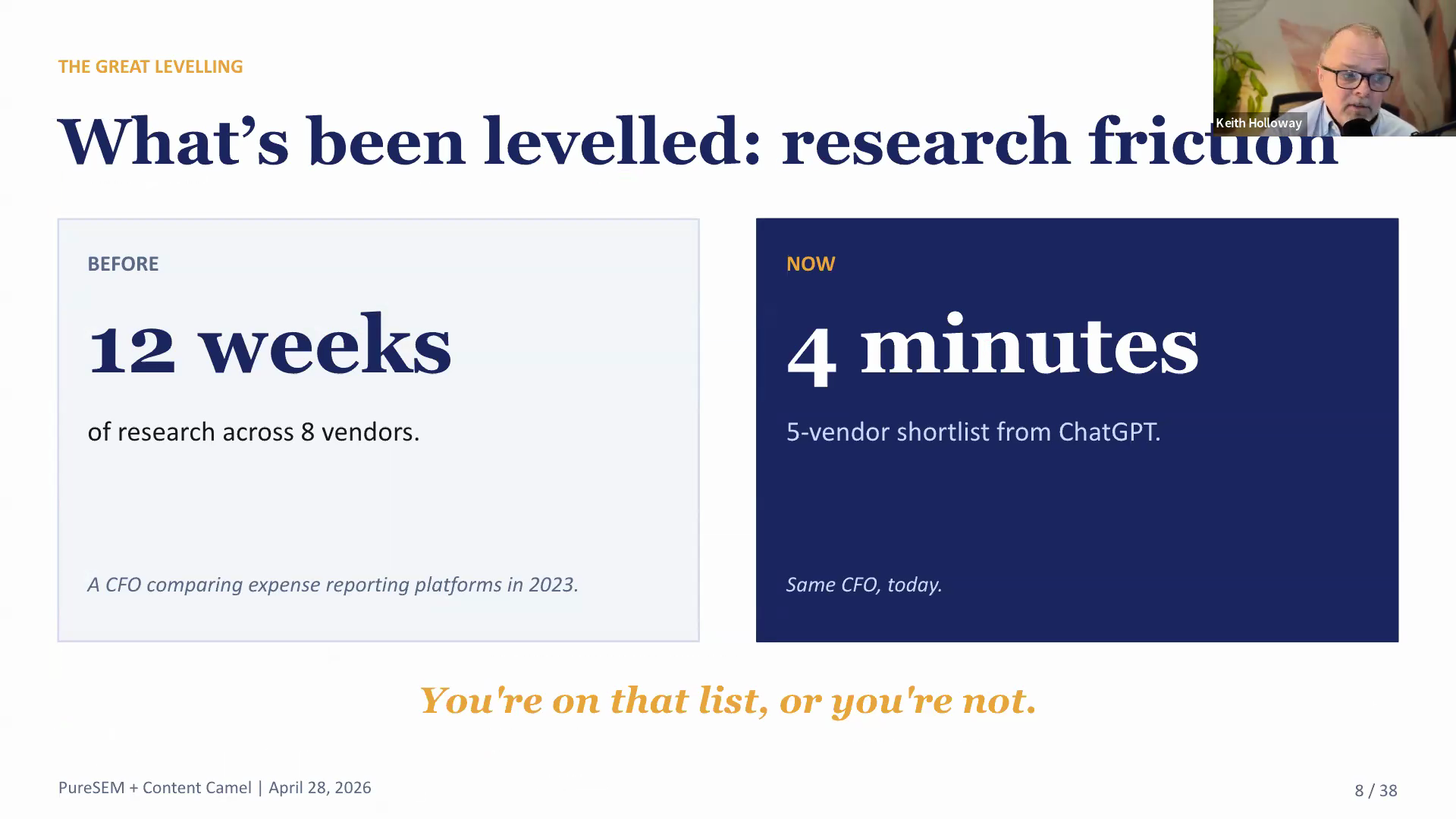
Your buyer’s research used to take twelve weeks. Now it takes four minutes (!).
That was the first slide Keith Holloway and I put up in our webinar, “The AI Enabled Buyer”, and it’s the theme that we unpacked and made actionable. A CFO buying expense software in 2023 spent three months comparing eight vendors. The same CFO today opens ChatGPT, asks one good question, and gets back five names with a comparison table before the coffee’s done.
If you’d rather watch than read, here’s the full recording:
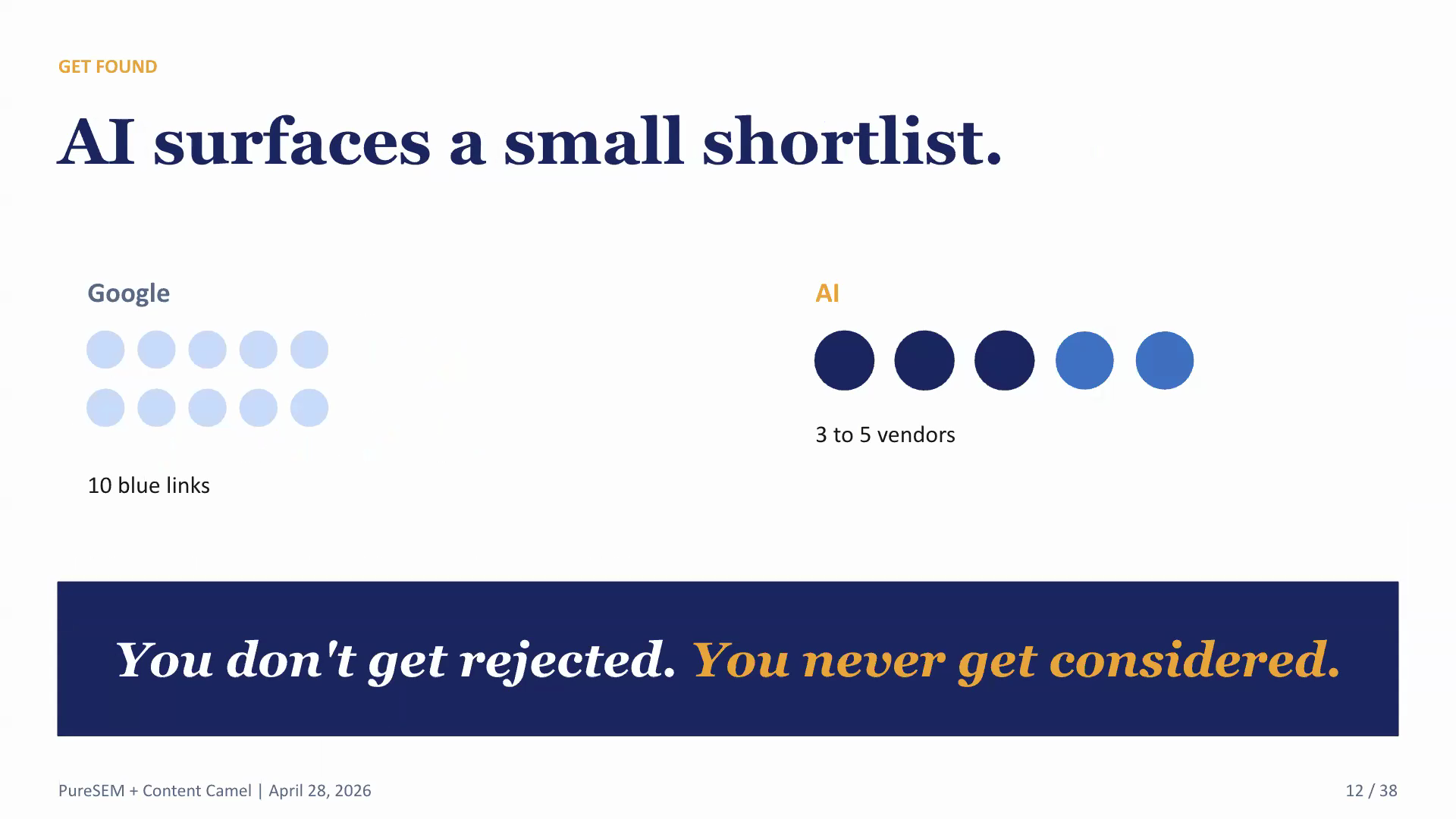
The vendors that didn’t make those five didn’t lose. They just never showed up. No rejection, no “thanks, we went another way.” They never got a swing at the plate.
For the past twenty-some years your buyer read ten blue links and built their own shortlist. Now the model builds it for them, hands it over like a recommendation, and most teams have no idea whether they’re on it.
If that sounds like more AI-is-coming hype, ok. I’m kind of fatigued by it all too, which is exactly why we didn’t want to run another one of those webinars. But two numbers got my attention. Gartner has 90% of B2B purchases going through AI by 2028, and two out of three buyers already use it as much as Google for vendor research. So, not a 2030 problem. We’re seeing this transformation happening in real time, and we have a front row seat to it.
SEO didn’t die, it became the cover charge
People talk about the “fact” that AEO is replacing SEO. That’s not how I think about it.
Underneath, the models don’t have their own fresh index of the web. You ask a question, they go run Google and Bing searches, read the pages, and stitch together an answer from what they find. Ahrefs looked at almost two million AI Overview citations, and the pages getting cited are mostly the ones already ranking in the top five.
So whatever the AI shows is mostly just what already ranks. If you’re invisible in regular search, you never make the citation set, so you never make the answer. AEO is a layer on top of SEO, not a swap for it. Anybody selling you one without the other is selling you half a plan.
The one thing the AI can’t fake
Google’s been fighting spun, rehashed content for a decade, and their big 2026 update went straight at the auto-generated stuff that just restates what everyone already said. It doesn’t ban you. It quietly buries you. And once you stop ranking, you stop getting cited, so you drop out of the AI answers too.
And it makes sense. The model was trained on everything already written, so if you publish the same post as everyone else, you’ve handed it something it could have written itself. Why would it ever point at you?
The part it can’t generate is your own stuff. Your data, your opinion, the case study only you have, the thing you learned the hard way and are willing to put your name on. Keith said it better than I did on the call: how do we stand out? We bring ourselves.
You win an AI market by being more human, not less. (I went deeper on the quality side of this in the AI generated content quality post.)
Everything is content
Strip a B2B deal down and there are really two things in it that you control: a person, usually in sales, and content. That’s the whole interaction. That’s what the buyer(s) are interfacing with.
And all of what gets transacted counts as content. The website and the deck, sure, but also the support docs, the demo videos, the pricing, the one-pagers, the call transcripts your team throws off every single day. It’s all context a buyer or their AI can pull from.
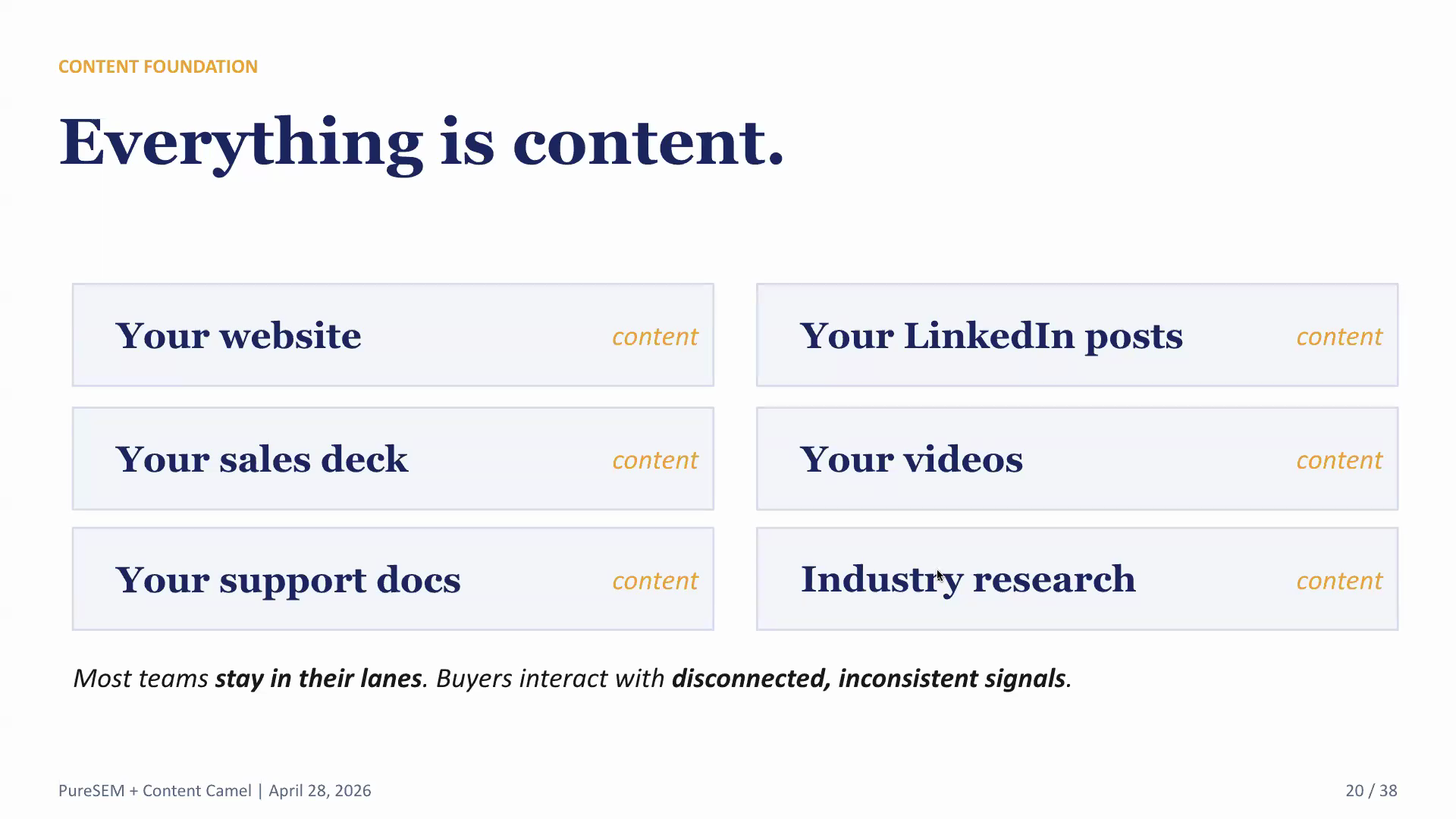
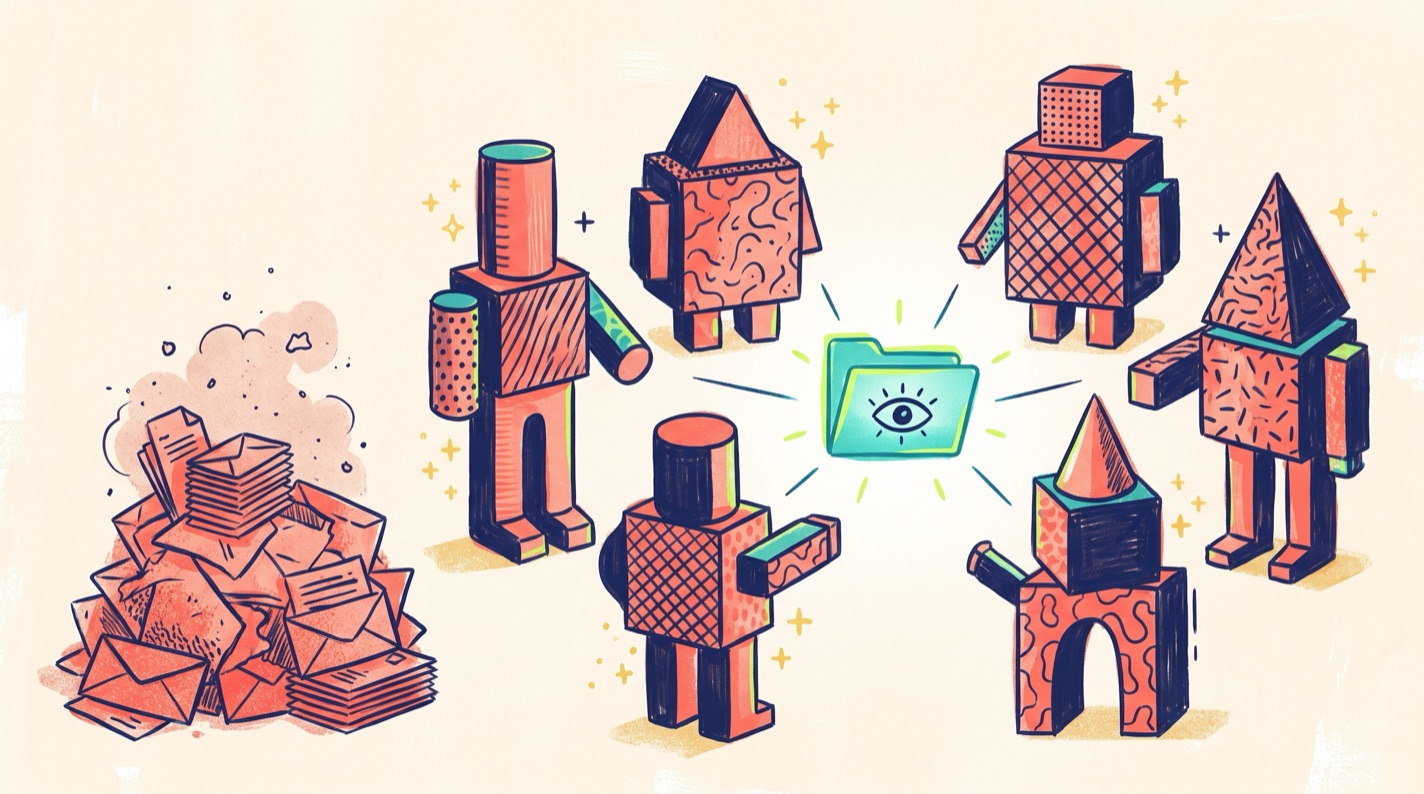
The trouble is it lives in lanes. Marketing has its folder, sales has its drive, product has a wiki, and nobody reads off the same page. When it’s scattered like that, the AI assembles your story from fifteen different places and you don’t get a vote.
If I had to name the single biggest level-up for a marketer, it’s your sales call transcripts. That’s pure voice of the customer, it changes constantly, and almost nobody feeds it anywhere useful. Get that into one organized place and a lot of the rest gets easier. (Same root problem I wrote about in the content gap in the B2B buying process. If you’ve never lined up what you have against what a buyer actually needs, start with an audit.)
Get out of the buyer’s way
So, from our perspective, the teams that win the next few years are the ones that make buying frictionless.
Imagine a business in 2005 with no website versus one that was online. Or a restaurant today you can’t order takeout from versus one that’s set up for it. There are winners and losers in that move every time, and water always flows downhill – people choose the path of least resistance. Deeply reflect on your own buyer’s experience, and ask where the friction is.
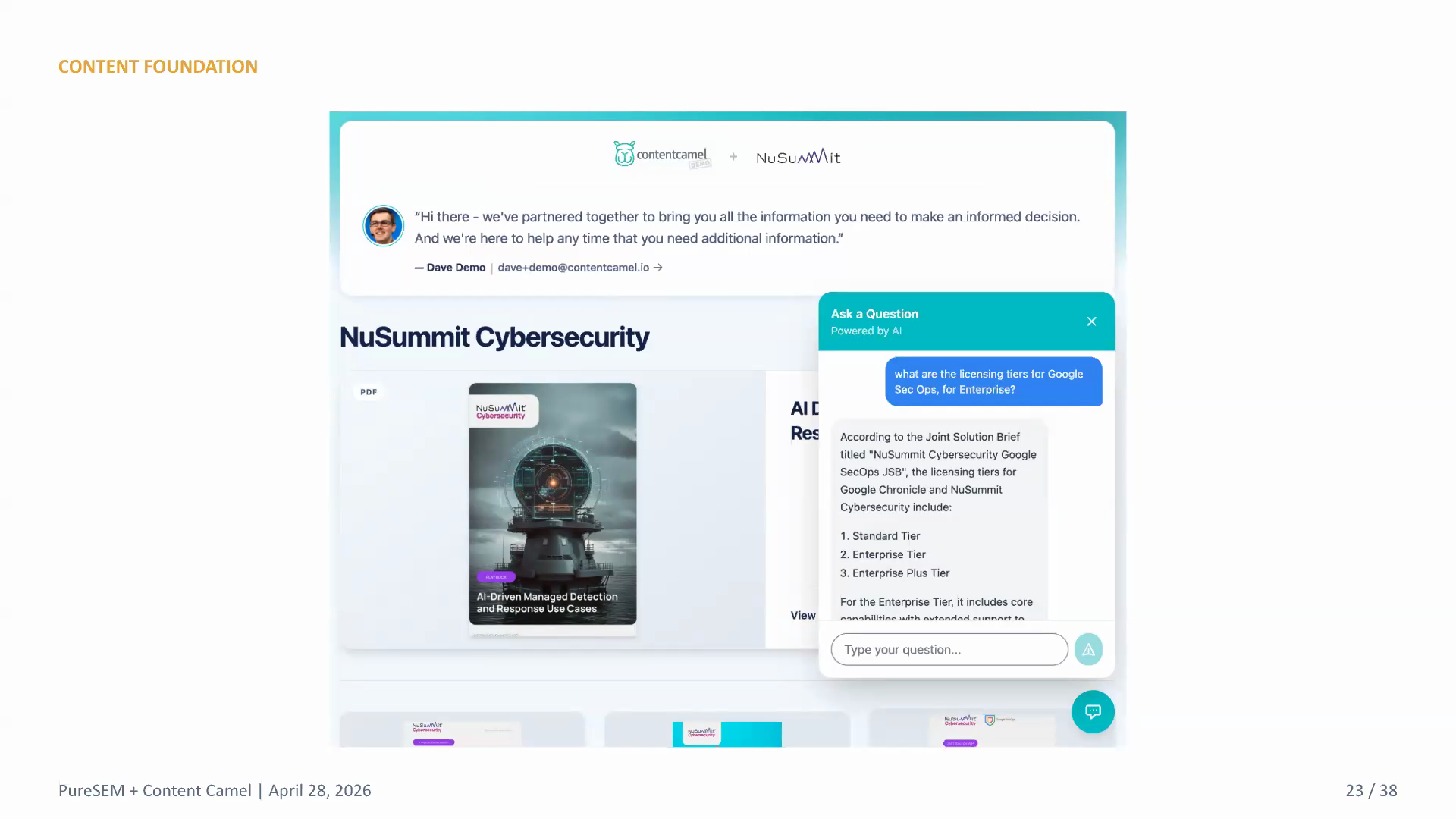
So we tried it on ourselves. We put an AI chat right on the buyer portal, the deal page a rep shares with a prospect. It only answers from what the rep actually put in that deal, not the open internet, not a made-up price. The buyer can get an answer at 11pm on a Sunday, and the rep gets pinged that they asked.
In researching for the webinar, we came back to car companies, of all organizations. Hyundai, Toyota, Kia, brutally competitive, and they’ll build you a tool that compares their car against a BMW right there on their own site. They know you’re cross-shopping, so they own the framing instead of pretending the competition doesn’t exist. Most B2B companies still won’t say a competitor’s name out loud, like it’ll summon them. Meanwhile the AI is already telling your buyer all about that competitor. You might as well be in the room when it happens.
Beyond that, one of the easiest wins, though, is to stop gating everything by reflex.
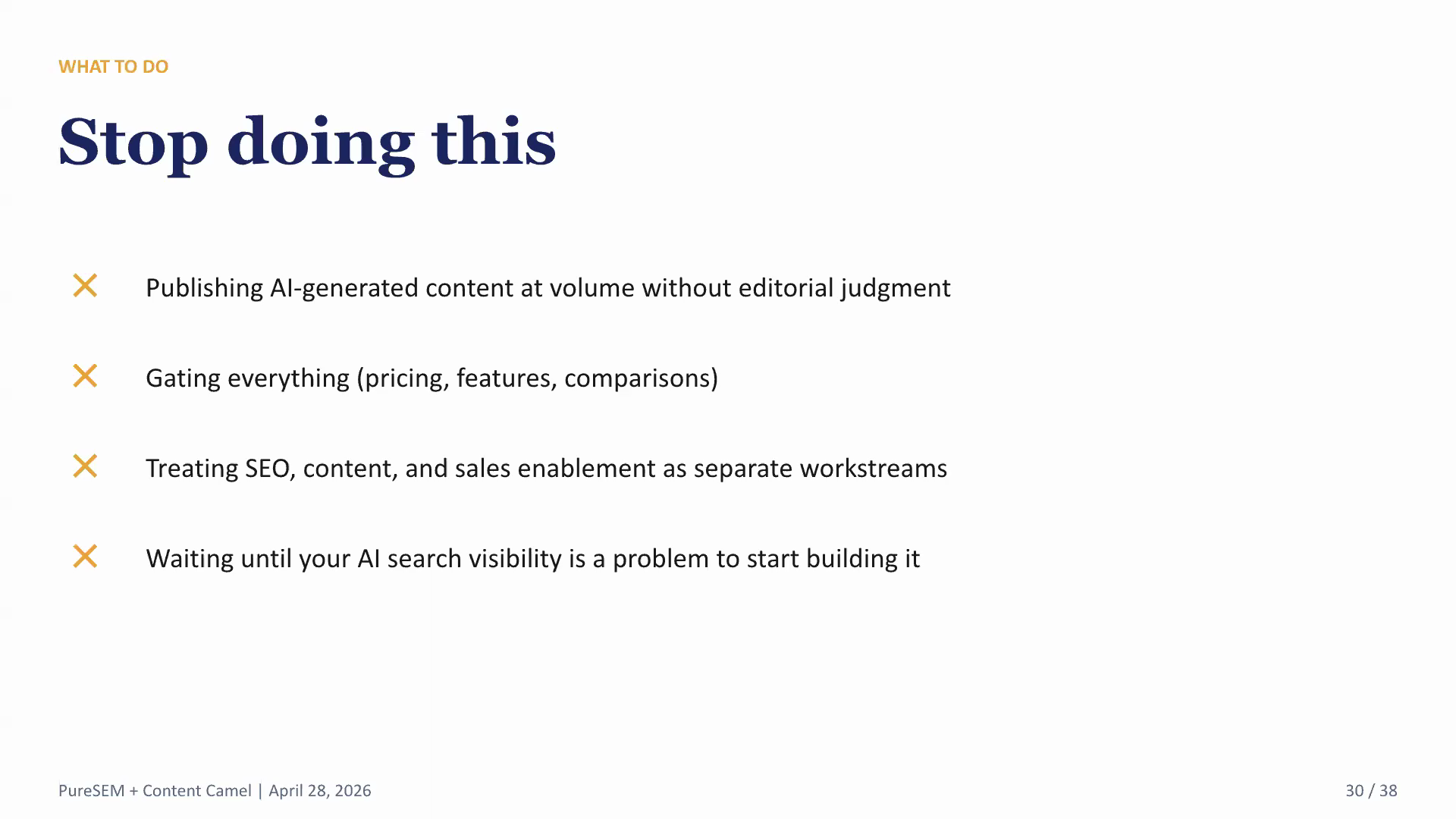
Ask an AI what some enterprise tool costs and it’ll tell you, pulled from a dozen places, even though that vendor would never put a number on their own page. The information is already out there. The only question is whether the version people find came from you. And the scrapers would rather take one clean answer than piece it together from fifteen, so giving them that source helps you anyway. How are you going to control the message?
Where this actually goes
Everything above is the demand side. The buyer is now fully enabled with AI. Your content (or lack thereof) quietly turned into the most important thing ahead of, during, and after the sale.
The harder half of moving forward is putting together the systems that drive this, and that’s where Keith and I spend most of our time now. How do you get your team, and the agents working next to them, to stay on brand and on message and actually current?
This is a transformational period and those that lay the foundation will compound the gap between those that don’t. Prompting AI is swinging a hammer, where you’re still doing every swing yourself. Building real systems is being the general contractor with a crew of trained pros and power tools who can frame the whole house. You don’t build a house with one hammer and one nail, and you don’t build a go-to-market engine one prompt at a time. We’ll get into how we’ve actually done it, and where it broke, next time. (More on that shift in how the nature of the work changed.)
Want the full conversation, slides and all? It’s on YouTube, and the slides are here: engage.contentcamel.io/yexss7.
And if the scattered-content thing hit home, that’s the whole reason Content Camel exists. Get your sales content into one place your team, your buyers, and the AI can actually find. Start free.
Then go ask an AI what it recommends in your category. If your product or company doesn’t come up, you’ve got your homework ahead of you.